


Highlights:
- Standard Chartered expects UNI to reach $100 by 2030 if tokenized finance continues to grow.
- The bank sees tokenized assets rising to $4 trillion as more products move on-chain.
- Uniswap could benefit from higher DeFi activity, stronger liquidity, and wider institutional interest.
Standard Chartered has set a bullish long-term target for Uniswap’s UNI token, saying the asset could reach $100 by the end of 2030. In a June 15 research note, the bank initiated coverage of UNI and linked its forecast to the expected rise in tokenized assets and the wider adoption of decentralized finance.
Advertisement

LATEST: 📈 Standard Chartered initiated Uniswap coverage with a $100 UNI forecast for 2030, citing a projected 37x rise in tokenized assets entering DeFi. pic.twitter.com/YDVR8XdwPo
— CoinMarketCap (@CoinMarketCap) June 16, 2026
The prediction came from Geoffrey Kendrick, Standard Chartered’s Global Head of Digital Assets Research. He said Uniswap could gain from a major shift in finance as more real-world assets move onto blockchain networks. At the time of the report, UNI traded near $2.93, implying the bank’s target represents an almost 34-fold increase over the next few years.
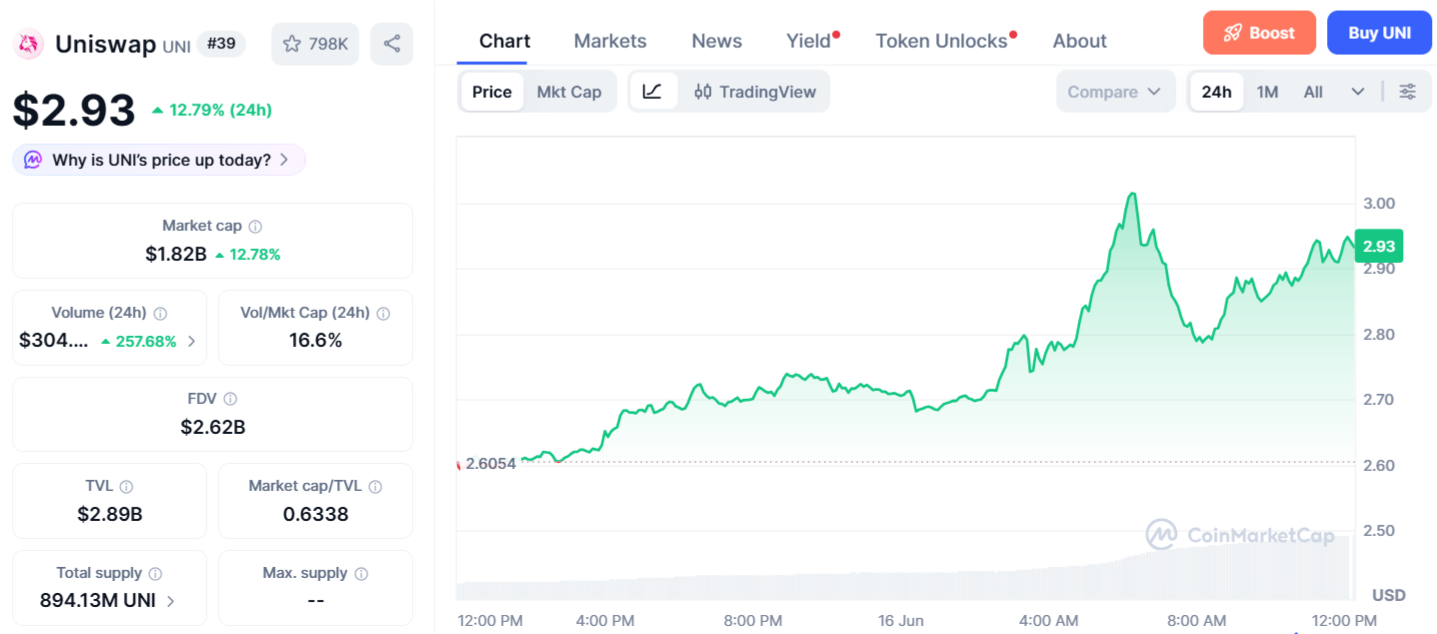
Standard Chartered also laid out a gradual price path for the token. The bank expects UNI to reach $6.50 by the end of 2026, $20 by the end of 2027, $40 by the end of 2028, $65 by the end of 2029, and $100 by the end of 2030.
Uniswap Could Become A Core Trading Layer for Tokenized Assets
The bank’s forecast is based on the idea that Uniswap could become more important as tokenized finance expands. Tokenized assets are traditional or real-world assets that are represented on a blockchain. These may include stablecoins, bonds, funds, stocks, and other financial products.
Standard Chartered said traditional finance firms should view Uniswap less as a retail decentralized exchange and more as market infrastructure. That means the bank sees Uniswap as a platform that could help support trading when more financial assets move on-chain.
Uniswap already allows users to swap tokens directly through blockchain-based liquidity pools. These pools hold assets and make trading possible without a normal exchange operator. As tokenized assets grow, platforms that can support deep liquidity and easy trading may become more important.
Standard Chartered Expects DeFi Assets to Grow Sharply
The bank expects the value of on-chain tokenized assets to rise from about $340 billion today to $4 trillion by the end of 2028. Its forecast includes around $2 trillion in stablecoins and another $2 trillion in non-stablecoin tokenized real-world assets. Standard Chartered also expects more of these assets to enter decentralized finance. Today, only about 3.5% of tokenized assets are active in DeFi. The bank expects that share to rise to 30% by 2030.
If that forecast plays out, DeFi assets could reach about $2.7 trillion by the end of the decade. That would be around 37 times higher than current levels. More activity in DeFi could increase trading volume on Uniswap and support stronger demand for UNI.
The bank also pointed to Uniswap’s planned “UNIfication” upgrade. It said higher activity could support more UNI token burns over time. Token burns remove tokens from circulation, which can reduce supply. UNI’s circulating supply has already fallen to about 895 million tokens from its original one billion supply.
Standard Chartered still warned that Uniswap faces competition. Smaller decentralized exchanges may target specific markets with stronger products. Regulation may also affect how banks and asset managers use DeFi platforms.

eToro Platform
Best Crypto Exchange
- Over 90 top cryptos to trade
- Regulated by top-tier entities
- User-friendly trading app
- 30+ million users

eToro is a multi-asset investment platform. The value of your investments may go up or down. Your capital is at risk. Don’t invest unless you’re prepared to lose all the money you invest. This is a high-risk investment, and you should not expect to be protected if something goes wrong.
Advertisement